Danfoss ECtemp Smart Thermostat

Introduction
ECtemp™ Smart is an electronic programmable timer thermostat used for controlling electrical floor heating elements. The thermostat is designed for fixed installation only and can be used for both direct heating of the entire room and for comfort heating of the floor. Among others, the thermostat has the following features:
Danfoss ECtemp™ Smart
- A touchscreen display with light.
- An easy-to-follow menu-driven programming and operation.
- An installation wizard with room/floor type-specific setup (requires an app).
- Support for multiple frame systems.
- Compatible with several 3rd party NTC sensors.
- Thermostat settings can be specified before installation and imported to the thermostat using a web-generated code, or copied from a thermostat in a similar installation.
- Smart access to thermostat settings after installation by using a web code interface, for easy setup or remote troubleshooting.
Regarding Connectivity:
- 10 smart devices (like Smartphone or Tablet) can be connected to 1 thermostat.
- 2 smart devices can be in contact with the thermostat at the same time.
Technical Specifications
| Operation voltage | 220-240 V~, 50/60 Hz |
| Standby power consumption | Max. 0,40 W |
| Relay: Resistive load Inductive load |
Max. 16 A / 3680 W @ 230 V Max. 1 A cos φ= 0,3 |
| Sensing units | NTC 6,8 kOhm at 25°C NTC 10 kOhm at 25°C NTC 12 kOhm at 25°C
NTC 15 kOhm at 25°C (Default) NTC 33 kOhm at 25°C NTC 47 kOhm at 25°C |
| Sensing values: (Default NTC 15 K) 0°C
20°C 50°C |
42 kOhm 18 kOhm 6 kOhm |
| Control | PWM (Pulse Wide Modulation) |
| Ambient temperature | 0 ° to +30 °C |
| Operation voltage | 220-240 V~, 50/60 Hz |
| Standby power consumption | Max. 0,40 W |
| Relay: Resistive load Inductive load |
Max. 16 A / 3680 W @ 230 V Max. 1 A cos φ= 0,3 |
| Sensing units | NTC 6,8 kOhm at 25°C NTC 10 kOhm at 25°C NTC 12 kOhm at 25°C
NTC 15 kOhm at 25°C (Default) NTC 33 kOhm at 25°C NTC 47 kOhm at 25°C |
| Sensing values: (Default NTC 15 K) 0°C
20°C 50°C |
42 kOhm 18 kOhm 6 kOhm |
| Control | PWM (Pulse Wide Modulation) |
| Ambient temperature | 0 ° to +30 °C |
| Operation voltage | 220-240 V~, 50/60 Hz |
| Standby power consumption | Max. 0,40 W |
| Relay: Resistive load Inductive load |
Max. 16 A / 3680 W @ 230 V Max. 1 A cos φ= 0,3 |
| Sensing units | NTC 6,8 kOhm at 25°C NTC 10 kOhm at 25°C NTC 12 kOhm at 25°C
NTC 15 kOhm at 25°C (Default) NTC 33 kOhm at 25°C NTC 47 kOhm at 25°C |
| Sensing values: (Default NTC 15 K) 0°C
20°C 50°C |
42 kOhm 18 kOhm 6 kOhm |
| Control | PWM (Pulse Wide Modulation) |
| Ambient temperature | 0 ° to +30 °C |
Danfoss ECtemp™ Smart
Electrical safety and Electro-Magnetic Compatibility for this product is covered by the compliance with the EN/IEC Standard “Automatic electrical controls for household and similar use”:
- EN/IEC 60730-1 (general)
- EN/IEC 60730-2-9 (thermostat)
Safety Instructions
- Make sure the mains supply to the thermostat is turned off before installation.
- Important: When the thermostat is used to control a floor heating element in connection with a wooden floor or similar material, always use a floor sensor and never set the maximum floor temperature to more than 35 °C.
Please also note the following:
- The installation of the thermostat must be done by an authorized and qualified installer according to local regulations.
- The thermostat must be connected to a power supply via an all-pole disconnection switch.
- Always connect the thermostat to continuous power supply.
- Do not expose the thermostat to moisture, water, dust, and excessive heat.
- This thermostat can be used by children aged from 8 years and above and persons with reduced physical, sensory or mental capabilities or lack of experience and knowledge, if they have been given supervision or instruction concerning use of the appliance in a safe way and understand the hazards involved, by a person responsible for their safety.
- Children should be supervised to ensure that they do not play with the thermostat.
- Cleaning and user maintenance shall not be made by children without supervision.
Mounting Instructions
 Place the thermostat at a suitable height on the wall (typically 80-170 cm.).
- The thermostat should not be placed in wet rooms.
- The thermostat must be placed outside zone 2. Place it in an adjacent room and use floor sensor only.
- Always place the thermostat according to local regulations on IP classes.
- Do not place the thermostat on the inner side of a poorly insulated exterior wall.
- Always install the thermostat at least 50 cm from windows and doors, due to draft, when using regulation in: floor and room mode or room alone mode.
- Do not place the thermostat in a way that it will be exposed to direct sunlight
- Note: A floor sensor is recommended in all floor heating applications and mandatory to thin mats under wooden floors to reduce the risk of overheating the floor.
- Place the floor sensor in a protecting plastic conduit in the floor construction in an appropriate place, where the floor is not exposed to sunlight or draft from door openings.
- Equally distant and >2 cm from the heating cables on both sides.
- The conduit should be flush with the floor surface, countersink the conduit if necessary and possible.
- Route the conduit to the connection box.
- The bending radius of the conduit must be min 50 mm

Follow the steps below to mount the thermostat:
- Unpack thermostat
- Connect the thermostat according to the connection diagram.
- The screen of the heating cable must be connected to the earth conductor of the power supply cable by using a separate connector.

- Note: Always install the floor sensor in a conduit in the floor.
- Fasten the thermostat firmly to a flush-mounted wall box or an exterior wall box by driving the screws through the holes in each side of the thermostat.
- Add the frame before assembling of the top part to the snap locks/bottom part.
- Click the front part module in place. Pay attention, in relation to the female header, in not to bending the connectors.

- Press carefully until the frame is fixed against the rubber gasket.
- When mounting and reassembling the thermostat.
- Important: Do NOT press in the center of the display screen.
- Press your fingers under the side of the front part and pull toward you until it releases from the snap lock:

Display Symbols
Top part main functionalities are to support user interface through display and hold all the controller logic. Display main functionalities are to show the current status of the Thermostat and recognize the user actions from the buttons. Display consists of different buttons, numbers and symbols.
| Nr� | Type | Description |
| 1 | Button/Symbol | Control button |
| 2 | Button/Symbol | Arrow Up button |
| 3 | Button/Symbol | Arrow Down button |
| 4 | Symbol | 3 digit 7 segment numbers with comma separator |
Symbol indications
| Indication | Mode/State | Description |
| Blue – blinking | Access Point Mode | Thermostat ready for set-up |
| Blue | Access Point Mode | Smart phone connected directly to the thermostat for set-up |
| Red – blinking | Fault state | Displays Error code |
| Red – slow pulsing | Active Mode | Indicating heating the floor (Relay on) |
| Green – constant | Active Mode | The thermostat active and connected to WiFi(Relay off) |
| Green – blinking | Active Mode & Access Point Mode | The thermostat waiting for confirmation of action |
| Arrows – blinking rapidly when touched | Active Mode | The safety lock is on |
Interaction directly on thermostat
| Green – blinking | Active Mode & Access Point Mode | The thermostat waiting for confirmation of action |
| Arrows – blinking rapidly when touched | Active Mode | Safety lock is on |
| Frost protection | Touch and hold Control (1) for
1 sec. |
Deactivate frost protection |
| Safety lock | Touch and hold Up (2) + Down (3)
for 3 sec. |
Activate/Deactivate safety lock |
| Factory restore | Touch and hold Control (1) + Up
(2) for 5 sec. After that touch Control (1) again to confirm |
Activates factory restore state |
| Away mode | Touch and hold Control (1) for 1 sec. to deactivate the Away mode | Activate/Deactivate Away/Vacation mode |
Error codes
When the error occurs and is resolved the thermostat, in some cases, will require a restart to start heating again.
| Error type | Nr� | Description | Solu- tion | Need restart |
| Floor Sensor disconnected | E1 | Connection to the sensor is lost | Contact Service | The thermostat requires a restart to operate again. |
| Floor Sensor short-circuited | E2 | Sensor short-circuited | Contact Service | The thermostat requires a restart to operate again. |
| Thermostat over-heated | E3 | The thermostat is over-heated, heating is turned off | Wait until the thermostat cools down | The thermostat requires no restart, but will start heat-
ing when the temperature is lowered |
| Unrecov- table error | E4 | Room temperature sensor value too high or too low | Contact Service | The thermostat requires a restart to operate again. |
Communication Error Codes
| Communication error | Nr� | Description |
| Wrong SSID or password | C1 | STA trying to connect to the AP |
| No IP address | C2 | STA – connection acquired, no IP yet, waiting for configuration data. |
| No internet connection | C3 | STA is connected and has an IP from the DHCP server. |
Configuring
Download App
- Download the Danfoss Smart™ App from App Store or Google Play or http://heating.danfoss.com/new-solutions/ectemp-smart.

- Find WiFi name and password for the WiFi network, that you would like to connect your thermostat. If in doubt contact the network administrator or internet service provider.

- Identify your floor sensor type ( in kOhm).
- Identify your installed heating output (in W), from label on the heating element.
- Power on the thermostat, and it will show “-“ in the display. Then it is ready to be configured using your iPhone and Android device.
- Open the Danfoss Smart™ App and follow the instructions and set-up flow in the App.
- Danfoss ECtemp™ Smart indication
- The Danfoss ECtemp™ Smart shows “–” indicating that power is ON, but still need to be configured.
Danfoss ECtemp Next Plus Installation Guide 5 Standard “Automatic electrical controls for household and similar use”:
- EN/IEC 60730-1 (general)
- EN/IEC 60730-2-9 (thermostat)
Safety Instructions
Make sure the mains supply to the thermostat is turned off before installation.
Important: When the thermostat is used to control a floor heating element in connection with a wooden floor or similar material, always use a floor sensor and never set the maximum floor temperature to more than 35°C.
Please also note the following:
- The installation of the thermostat must be done by an authorized and qualified installer according to local regulations.
- The thermostat must be connected to a power supply via an all-pole disconnection switch.
- Always connect the thermostat to the continuous power supply.
- Do not expose the thermostat to moisture, water, dust, and excessive heat.
| Thermal resistance [m2K/ W] | Examples of flooring | Details kg/m3 | The approximate setting for 25°C floor temperature |
| 0,05 | 8 mm HDF-based laminate | > 800 | 28°C |
| 0,10 | 14 mm beech parquet | 650 – 800 | 31°C |
| 0,13 | 22 mm solid oak plank | > 800 | 32°C |
| < 0,17 | Max. carpet thickness suitable for floor heating | acc. to EN 1307 | 34°C |
| 0,18 | 22 mm solid fir planks | 450 – 650 | 35°C |
Mounting Instructions
- Place the thermostat at a suitable height on the wall (typically 80-170cm.).
- The thermostat should not be placed in wet rooms.
- Place it in an adjacent room and use the floor sensor only. Always place the thermostat according to local regulations on IP classes and use floor sensors only.
- Do not place the thermostat on the inner side of an exterior wall.
- Always install the thermostat at least 50 cm. from windows and doors.
- Do not place the thermostat in a way that it will be exposed to direct sunlight.
Note: A floor sensor enables more accurate temperature control and is recommended in all floor heating applications and mandatory under wooden floors to reduce the risk of overheating the floor.
Danfoss ECtemp Next Plus
- Place the floor sensor in a conduit in an appropriate place where it is not exposed to sunlight or draft from door openings.
- Equally distant and >2cm from two heating cables.
- The conduit should be flush with the floor surface – countersink the conduit if necessary.
- Route the conduit to the connection box.
- The bending radius of the conduit must be min 50mm.
- Connect the thermostat according to the connection diagram
Symbols
The following symbols appear in the display:
Settings
Power ON/OFF
IMPORTANT DURING SET-UP
Select whether only a floor sensor or a combination of room and floor sensors should be used. A “room only” option is also available, but requires that you have to break the small plastic seal on the back of the display module, e.g. using a screwdriver; it will be possible to set the maximum floor temperature up to 45°. Furthermore, it will be possible to use only a room sensor. However, this option is not recommendable due to an increased risk of overheating the floor.

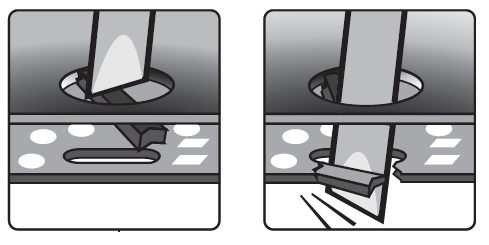
IMPORTANT: When the thermostat is used to control a floor heating element in connection with a wooden floor or similar material, always use a floor sensor and never set the maximum floor temperature to more than 35°C.
Note: Please contact the floor supplier before changing the maximum floor temperature and be aware of the following:
- The floor temperature is measured there, where the sensor is placed.
- The temperature of the bottom of a wooden floor can be up to 10˚C higher than the top.
- Floor manufacturers often specify the max. the temperature on the top surface of the floor.
Warranty
The products will, in the event of a fault that can be tracked back to a manufacturing defect in the Danfoss product, be repaired or replaced free of charge. To apply for this warranty the installation must be performed by an authorized installer and the warranty certificate has to be stamped, signed, and provided. For more details read our warranty terms and conditions.
Disposal Instruction
Danfoss
- Danfoss A/S
- DK-6430 Nordborg
- Denmark
- Tel.: +45 74 88 22 22
- Telefax: +45 74 49 09 49
- E-mail: [email protected]
Reference
Download Manual:
Danfoss ECtemp Smart Thermostat User Manua User Manual
OTHER MANUALS
Danfoss ECtemp Smart Thermostat Product Specifications Guide
